AI/ML Engineer - Data & Analytics Team
July 2025 - Present · 5 mos
Medina, Minnesota, United States
Leading the design and implementation of enterprise-scale AI systems that combine retrieval-augmented generation (RAG), Text-To-SQL, LLMOps, and secure Azure cloud architecture to bring generative AI into production across Polaris.
Standardizing LLMOps:
- Establishing a Polaris-wide LLMOps framework governing model selection, evaluation, and lifecycle management. Defining metrics for performance, safety, compliance, value, and cost to ensure reliability, governance, and scalability in AI deployments.
Enterprise RAG Platform:
- Architecting a retrieval-augmented generation platform that ingests and reasons over billions of PDFs, HTML documents, and technical manuals. The system integrates large-scale ingestion, semantic retrieval, and summarization to deliver accurate, citation-backed, and explainable answers in real time.
- Built data ingestion pipelines that normalize heterogeneous content into a canonical schema with blue/green indexing for zero downtime.
- Developed a multi-source retrieval orchestrator blending keyword, vector, and semantic search, performing cross-source deduplication and weighted rank fusion.
- Created embedding and contextual retrieval pipelines using Azure AI Search and Azure OpenAI, enabling grounded, context-aware responses.
- Implemented Clean Architecture in C# (.NET 8) to separate ingestion, retrieval, orchestration, and presentation (API/chat) layers for scalability and maintainability.
- Integrated Semantic Kernel orchestration to support agent chat workflows and downstream interoperability.
- Partnered with infrastructure teams to deploy Managed Identity, ABAC-secured retrieval, and observability pipelines for reliability and compliance.
- Established QA and telemetry loops to monitor retrieval precision, summarization fidelity, and latency across production systems.
Additional AI Initiatives:
- Unstructured-to-Structured Data Pipelines: Transforming CAD drawings and other complex datasets into structured JSON through OCR and computer vision–based object detection and relationship mapping.
- Text-to-SQL API Platform: Building a secure, standardized API for natural language queries using LangChain, Semantic Kernel, FastAPI, and Azure API Management, with Key Vault–based secrets, OpenAPI endpoints, and centralized logging for governance and traceability.
Data Scientist - Ride Command Data Team
Jan 2025 - July 2025 · 7 mos
Medina, Minnesota, United States
- Designed and productionized a scalable ML feature pipeline by integrating legacy SEQ and Kafka streaming data, enhancing ingestion efficiency and enabling real-time connected vehicle analytics in Snowflake.
- Built general-purpose and advanced features (e.g., engine speed, wheel speed, battery trends, horsepower estimation) powering high-impact ML use cases such as software anomaly detection, battery health monitoring, and targeted marketing campaigns.
- Developed and deployed an end-to-end software anomaly detection ML model, delivering an estimated $350K in annual ROI and significantly reducing diagnostic time for service teams. Integrated the model into a stakeholder-facing Streamlit app with CRM access for seamless operational use.
- Investigated battery health by analyzing voltage patterns across vehicle lifecycles, identifying trends linked to failure, trickle charger behavior, and replacement events. Insights were shared with engineering leaders during a field site visit to inform future product strategy and increase customer battery health.
- Contributed to a targeted marketing use case by profiling customer-registered vehicles, segmenting by chassis type, mileage, and usage patterns to support personalized campaign development and customer behavior analysis.
- Created a vehicle analytics dashboard in Streamlit for VIN-level diagnostics, integrating real-time and historical telemetry, fault codes, and ML results, enabling data-driven insights for cross-functional stakeholders.
- Partnered with data engineers to implement upstream improvements (e.g., clustering & partitioning strategies), enhancing pipeline performance and reducing unnecessary data volume.
- Authored detailed documentation in Confluence, including architecture diagrams, feature development guides, onboarding resources, and a walkthrough video—ensuring long-term scalability and smooth knowledge transfer across the team.
AI/ML Solution Architect - Data & Analytics Team
Jul 2024 - Present · 7 mos
Medina, Minnesota, United States
- Text-To-SQL Application: Designed and launched a generative AI-powered marketing list application using LangChain, vector databases, and Streamlit. Led data preparation with star schemas and refined “golden” queries to optimize text-to-SQL model performance, delivering an intuitive tool that integrates seamlessly into corporate marketing workflows.
- Led evaluations of platforms like DataRobot, Databricks, and Azure AI Studio, mapping capabilities to classification, forecasting, and generative AI use cases. Delivered actionable recommendations through concise executive presentations, guiding enterprise AI/ML strategy.
- Streamlined Python script deployment with Docker and CI/CD workflows, standardized Streamlit app development with modular architecture, and implemented Databricks Asset Bundles to improve scalability and efficiency.
- RAG Model: Developed a retrieval-augmented generation (RAG) application, enabling advanced text-to-document retrieval and in-line citations from vector databases. Designed a user-friendly Streamlit interface with robust features like document previews and source-linked responses, ensuring accuracy and usability for enterprise knowledge management.
- Built financial reporting workflows in Databricks and achieved 120x performance gains via parallel processing and delivering actionable cost insights for enterprise resource optimization.
Computer Vision Scientist - Neural Network / Machine Vision Team
Jan 2024 - Jul 2024 · 7 mos
Plymouth, Minnesota, United States
- Decoupled a monolithic 1500-line file into modular components with nine classes, implemented unit tests, and introduced Doxygen for documentation, setting a software engineering standard for future projects. Worked with technologies such as YOLO, Darknet, and Darkhelp to develop features in C++ for the computer vision codebase.
- Developed reusable, configuration-driven local orchestrators using a Polaris SDK for deployment across manufacturing sites. Standardized processes reduced setup time and simplified debugging for Polarisnnet V2 implementations.
- Automated the validation process for Polarisnnet models, generating statistical reports and integrating Azure capabilities for video and result management. Provided scalable scripts and documentation adopted by manufacturing sites.
- Created a comprehensive Confluence space to centralize documentation, define coding standards, and streamline collaboration for the Polarisnnet team, filling critical gaps and ensuring alignment with software engineering best practices.
- Conducted extensive validations comparing V1 and V2 YOLO models, showcasing improved performance to Spirit Lake and other sites. Developed automated validation tools to foster trust and accelerate V2 adoption.
Software Engineer - E&O Team
Jul 2023 - Jan 2024 · 7 mos
Plymouth, Minnesota, United States
- Transitioned two production manufacturing applications (DPIR and VIA) from Xamarin.Forms to .NET MAUI, including updating to .NET 8. Delivered the projects ahead of schedule while addressing build errors, refactoring startup logic, and integrating new features.
- Enhanced functionality in production manufacturing applications using Xamarin.Forms and C# within an agile scrum environment. Added a native Windows component for improved site usability, leading the project through the architecture board, the certificate signing process, and security approval processes.
- Created a comprehensive Confluence space to centralize team documentation, address gaps, and establish coding standards. Advocated for the inclusion of unit tests in all repositories, setting a precedent for quality in each sprint.
- Worked with architecture, security, and platform teams to streamline deployment pipelines and processes, ensuring seamless integration of applications across environments.
Software Development Intern - SC+ Team
May 2022 - Aug 2022 · 4 mos
White Bear Lake, Minnesota, United States
- Enhanced Trane’s BACnet capture feature by implementing remote debugging capabilities, utilizing multithreading and Object-Oriented design principles to optimize technician workflows.
- Refactored Linux network code by converting Python to C++ to improve performance and system compatibility.
- Developed Python scripts to automate ZAP security tests, improving testing efficiency and vulnerability detection.
- Integrated BACnet capture functionality into Trane’s unit controllers by modifying the shared code base and managing CMake dependencies.
- Resolved security vulnerabilities using Coverity to ensure code quality and system security.
- Led and mentored fellow software engineering interns, providing guidance on project execution and setup.
Software Engineer Intern - SC+ Team
May 2021 - Aug 2021 · 4 mos
White Bear Lake, Minnesota, United States
- Developed two production-level applications for the Trane SC+ system controllers, utilizing full-stack development in C++ and JavaScript.
- Designed and implemented the Time Service Application, which validates and updates the time on outdated system controllers using a custom TLS handshake (set for production in 2022).
- Created the Crash Dump Application, which automates the process of uploading stack trace files to Trane’s cloud network via POST requests, enhancing system monitoring and troubleshooting.
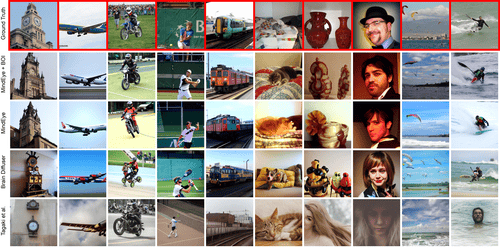
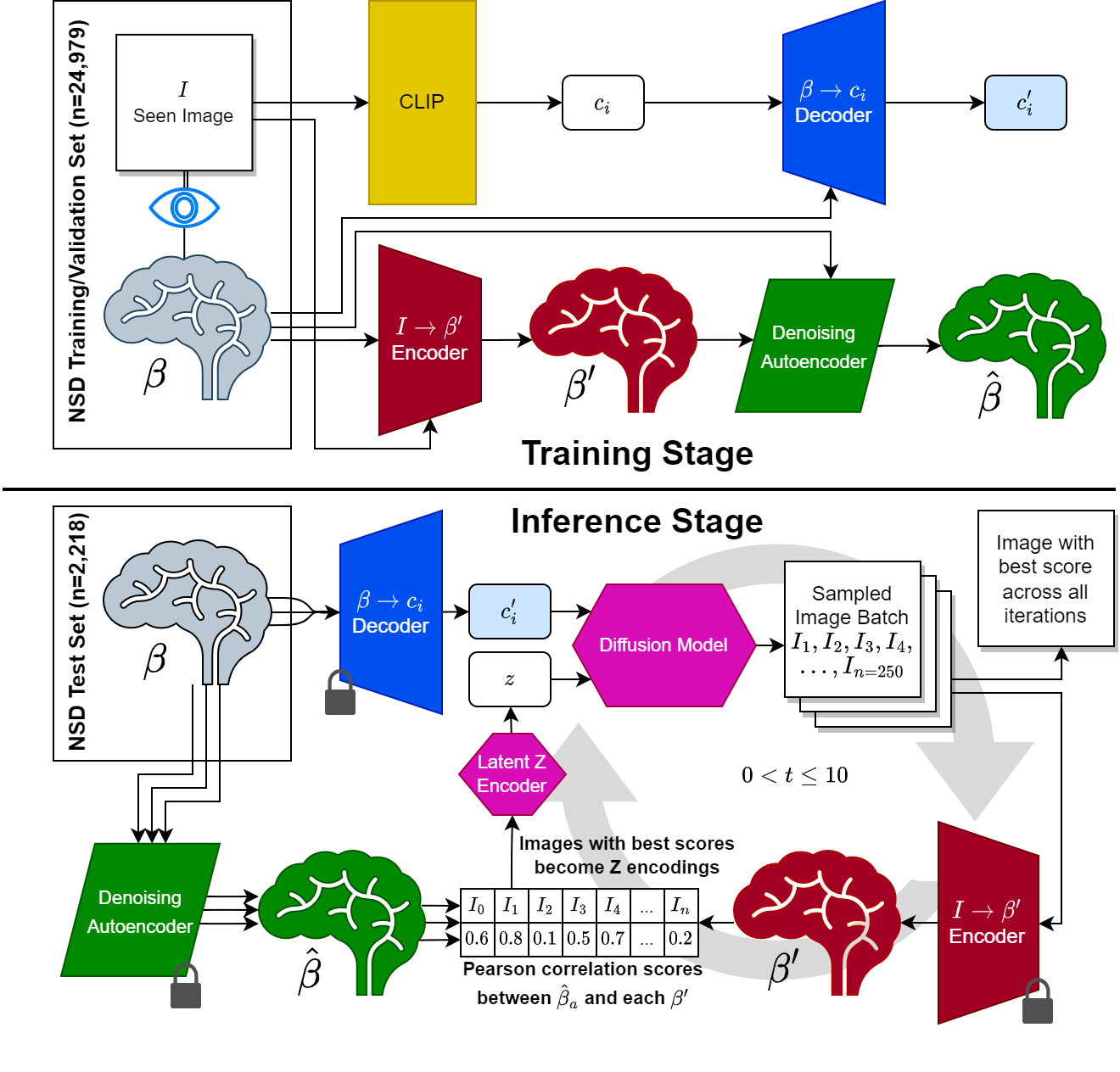
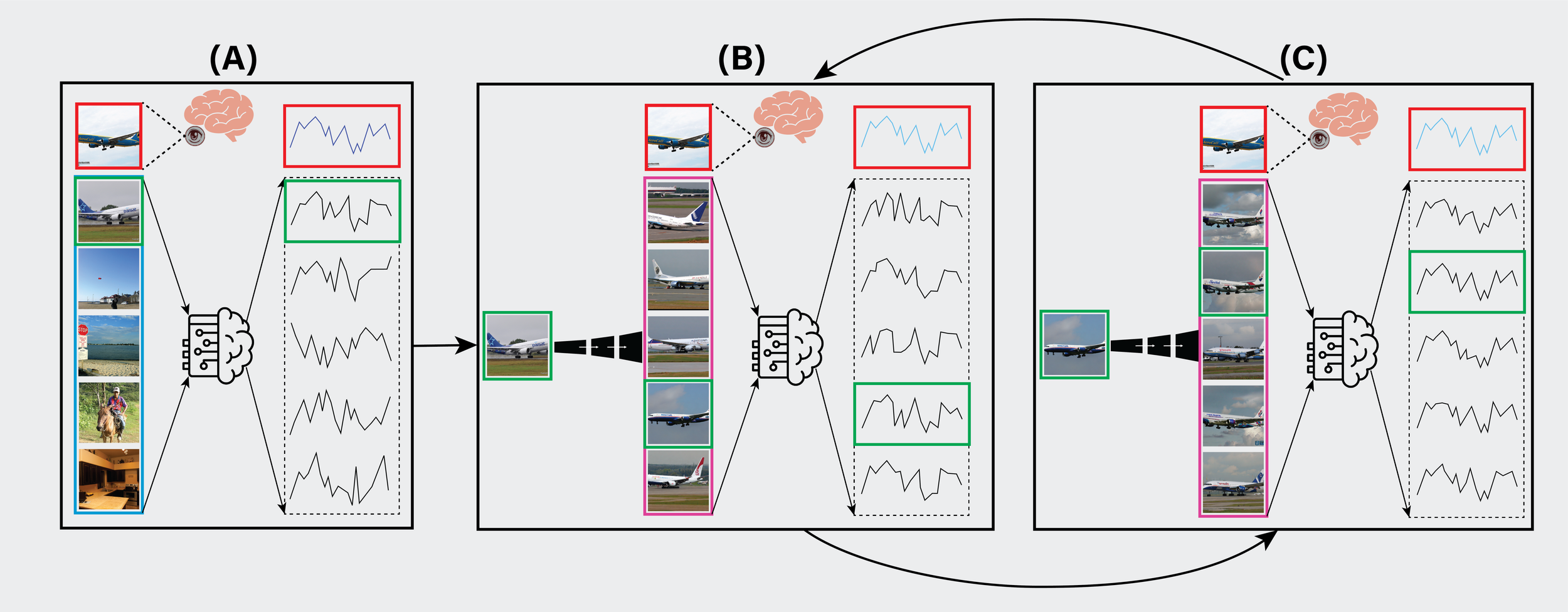
Worked in the Computational Neuroscience Lab under Dr. Thomas Naselaris on the Second Sight project, which focuses on building machine learning models to decode fMRI brain activity and reconstruct images seen by subjects in a scanner. Developed and trained deep learning models using PyTorch on NVIDIA A100 GPUs to recover semantic information and improve image reconstruction from brain activity.
Research Focus
- Applied advanced deep learning techniques to optimize image reconstructions from brain data using brain-optimized encoding models and guided stochastic search.
Key Achievements
- Contributed to three published papers at the Cognitive Computational Neuroscience (CCN) Conference.
- Co-authored research that was presented at Oxford University.
List of Publications
- Brain-Optimized Inference Improves Reconstructions of fMRI Brain Activity
- Second Sight: Using Brain-Optimized Encoding Models to Align Image Distributions with Human Brain Activity
- Reconstructing Seen Images from Human Brain Activity via Guided Stochastic Search
This project served as the foundation for my Master’s thesis and contributed to advancements in brain-computer interfacing and visual reconstruction algorithms.